

How to Source World Cup Candy with Low MOQ for E-commerce Success
As an e-commerce buyer, you face constant pressure to find seasonal products that sell fast without tying up capital in excess stock. World Cup candy is a high-demand opportunity, but traditional suppliers often require large minimum order quantities (MOQs) that risk overstocking and wasted inventory. This article cuts through the noise to show how smart buyers identify flexible suppliers, structure SKUs for quick turnover, and build reliable partnerships that turn event-driven sales into repeat revenue. You'll learn practical steps to source low-MOQ World Cup candy that fits your budget and scales with demand-without guesswork or costly mistakes.
What Buyers Validate First: Certifications and Supplier Flexibility
When sourcing World Cup candy, your first checkpoint isn't price or packaging-it's proof the supplier can meet your volume needs while guaranteeing safety. Start by verifying certifications like FDA, EFSA, or BRC, which signal compliance with major markets. But don't stop there; dig into MOQ policies. Many suppliers claim "low MOQs" but hide hidden requirements like case-packed minimums or flavor restrictions. A reliable partner will offer true flexibility-say, 500 units per SKU with no forced flavor bundles-and back it up with real examples from e-commerce clients. For instance, MiniCrush provides FDA/EFSA-certified World Cup gummies starting at 300 units per design, with no extra fees for small batches. This transparency lets you test new products without betting your entire budget on unproven items. Always ask for audit reports or client references to confirm they've handled similar low-volume orders. Skipping this step risks delays, rejected shipments, or stranded inventory when certifications fall short.
Smart SKU Structure Rules for E-commerce Agility
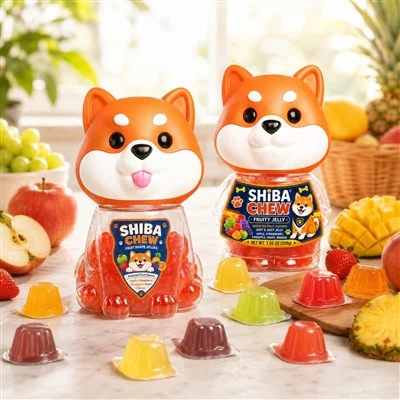
Your World Cup candy lineup shouldn't mimic supermarket bulk packs. E-commerce thrives on curated, low-risk SKUs that encourage trial and repeat buys. Limit your core range to 3–5 hero products-like mini jelly cups, themed gummy bears, or sugar-free chews-each with a clear purpose: one for impulse clicks, one for social media sharing, and one for repeat customers. Avoid the trap of overcomplicating with 20+ flavors; data shows that for seasonal items, buyers convert best with focused choices. Structure SKUs around pack sizes that match online behavior: single-serve packs (e.g., 10-count pouches) for trial, and small multipacks (e.g., 3-packs) for loyalty. Crucially, ensure your supplier allows mixing SKUs within low MOQs-so you can order 300 units of jelly cups and 200 of gummies in one shipment. This prevents dead stock from "all-or-nothing" orders and lets you pivot fast based on real-time sales data. Remember, a clean SKU structure means faster fulfillment, lower storage costs, and higher margins when you're not stuck discounting unpopular variants.
Compliance Clarity: Avoiding Costly Shipping Surprises
Nothing kills e-commerce momentum like a shipment held at customs due to murky compliance. World Cup candy must navigate strict food regulations, especially for event-themed items where labels or ingredients might trigger scrutiny. Demand full documentation upfront: ingredient lists with allergen callouts, country-of-origin details, and certification badges (like HALAL or Kosher if relevant) pre-approved for your market. Suppliers should provide digital compliance kits-PDFs of test reports and label templates-that you can instantly share with your logistics team. For example, MiniCrush includes FSMA-FSVP paperwork with every low-MOQ order, so you avoid last-minute delays. Also, verify that packaging has scannable QR codes linking to safety info; this builds trust with online shoppers who check details before buying. Skipping this leads to rejected listings, return spikes, or even platform bans. Treat compliance as non-negotiable-it's cheaper to source right than to fix errors after shipping.
Shelf Performance: Driving Clicks and Repeat Sales Online
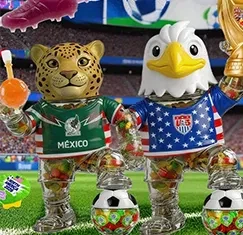
In e-commerce, "shelf performance" means how well your product converts browsers into buyers-and keeps them coming back. World Cup candy must grab attention in crowded feeds, so prioritize vibrant, mobile-friendly packaging with clear event branding (e.g., "World Cup 2026 Limited Edition"). But looks aren't enough; your product needs built-in repeat triggers. Choose items with collectible elements-like team-themed wrappers or limited-edition shapes-that encourage customers to buy multiple SKUs. MiniCrush's freeze-dried hard candies, for instance, use stadium-inspired designs that fans snap up for social posts, boosting organic reach. Track metrics like add-to-cart rate and repeat purchase percentage; if a SKU doesn't hit 15% repeat buys within two weeks, it's not sticky enough. Partner with suppliers who share sales data to refine this-avoid those who treat you as a one-off order. Strong shelf performance online means less ad spend chasing new customers and more profit from loyal fans.
Reorder Stability: Building Trust for Seasonal Cycles
World Cup events come every four years, but smart buyers treat them as recurring revenue streams by locking in reorder reliability. Start by confirming your supplier's production calendar-can they ramp up for the next World Cup without delays? Ask about buffer stock options where they hold raw materials for quick reorders. MiniCrush, for example, uses patented freeze-drying tech to produce small batches consistently, so you never face "out of stock" during peak demand. Crucially, agree on a reorder trigger point (e.g., when inventory hits 30 days' supply) and a fixed lead time. Document this in writing to prevent "sorry, we're busy" excuses. Test stability with a micro-order first; if they deliver on time at low volume, they'll scale for bigger events. Without this, you'll scramble for last-minute alternatives, hurting customer trust and margins. Reorder stability turns a one-time sale into a four-year partnership where you both win.
Buyer Checklist: Quick Evaluation for Low-MOQ World Cup Candy
Use this to vet suppliers in under 10 minutes:
☑️ MOQ Proof: Request written confirmation of per-SKU minimums (e.g., "300 units") with no hidden case requirements.
☑️ Certification Access: Verify digital copies of FDA/EFSA or equivalent reports are included at no extra cost.
☑️ SKU Flexibility: Confirm you can mix designs/flavors within the MOQ (e.g., 150 jelly cups + 150 gummies).
☑️ Compliance Kit: Ensure packaging has QR codes linking to allergen info and safety docs.
☑️ Reorder Timeline: Get a signed lead time (e.g., "21 days from order") for repeat batches.
☑️ E-commerce Track Record: Ask for 2 client examples of low-MOQ orders fulfilled for online stores.
Common Mistakes That Sink E-commerce Buyers
Over-SKUing: Launching 10+ flavors for a short event. Stick to 3–5 winners to avoid dead stock.
Ignoring Compliance Early: Assuming "it's just candy" leads to customs holds-verify certs before ordering.
Trusting Vague MOQs: "Low MOQ" without written terms invites scope creep; demand specifics.
Skipping Micro-Tests: Ordering full volume without a 100-unit trial risks total loss if sales flop.
No Reorder Plan: Treating World Cup candy as one-off means missing the next event's profits.
Conclusion
Sourcing World Cup candy with low MOQs isn't about finding the cheapest deal-it's about building a partnership where flexibility meets reliability. When you prioritize clear certifications, lean SKU structures, and documented reorder stability, you transform seasonal spikes into predictable revenue cycles. Suppliers who deliver small batches consistently become your secret weapon for e-commerce agility, turning event hype into loyal customers who return for every tournament. That's how smart buyers turn World Cup buzz into long-term profit, order after order.