

How to Boost In-Store Impulse Buy Rate for World Cup Candy: A Buyer's Guide to Smart Procurement
Introduction
World Cup season drives massive candy sales, but many buyers struggle to turn fan excitement into consistent in-store impulse purchases. This article cuts through the noise to show you how to pick products that grab attention at the checkout lane or snack aisle. We'll focus on practical steps for evaluating World Cup-themed candy-not just for the tournament, but for repeat orders year after year. Forget flashy promises; we'll cover what actually makes shoppers grab a bag without thinking twice. Let's get straight to what matters for your bottom line.
What Buyers Validate First: Trust Before the Trophy
When fans see World Cup candy, they don't stop to read fine print-they react in seconds. Your first job as a buyer is verifying trust signals that trigger that split-second grab. Start with compliance clarity: Does the packaging scream "safe" without confusion? Look for visible FDA or EFSA certifications right on the front label-not buried in tiny text. For example, MiniCrush World Cup gummies display BRC and HACCP marks prominently, so shoppers instantly feel confident. Next, check ingredient transparency. Simple lists like "real fruit juice, no artificial colors" beat vague terms like "natural flavors." This isn't about being health-focused; it's about reducing hesitation. If a parent sees sugar-free or vegan options clearly called out, they're more likely to toss it in the cart during a busy matchday rush. Finally, validate audit proof. Brands that pass major retailer checks (like Costco or Disney) prove they handle production safely-no surprises during peak season. Skip products where certifications are hard to find; those gaps kill impulse buys before they start.
SKU Structure Rules: Less Choice, More Sales
Too many SKUs paralyze shoppers. For World Cup candy, stick to 3–5 core options that cover key moments: pre-game hype, halftime cravings, and post-match celebrations. Think small: a single-serve pouch for quick grabs, a shareable bag for groups, and maybe a novelty shape (like a mini soccer ball) for novelty. MiniCrush nails this with their World Cup line-just four SKUs: classic gummies, sour kicks, sugar-free bites, and a limited-edition "Golden Goal" pack. Why does this work? Data shows shoppers spend 20% less time deciding when faced with fewer choices. As a buyer, reject suppliers pushing 20+ flavors. Instead, demand clear SKU logic: each variant should solve one problem (e.g., "sour" for teens, "sugar-free" for health-conscious fans). Test this by asking suppliers, "Which SKU sells fastest in convenience stores?" If they can't answer, move on. Streamlined SKUs also cut your inventory risk-you won't be stuck with unsold pineapple-flavored jelly after the final whistle.
Compliance Clarity: No Guesswork at the Shelf
World Cup candy must comply with local rules, but messy labeling kills impulse buys. Buyers should insist on packaging that makes compliance obvious at a glance. For instance, EU retailers need EFSA certification badges visible within 3 seconds of viewing-no hunting through barcodes. MiniCrush prints Kosher and HALAL symbols right beside the product name, so religious or dietary shoppers never pause. Also, check for language simplicity: avoid technical terms like "E-numbers" on front panels. Use plain phrases like "gluten-free" instead of "meets Codex Alimentarius standards." This isn't nitpicking; unclear labels cause 30% of abandoned purchases in impulse categories. As a buyer, run a quick test: show the packaging to a colleague for 5 seconds. If they can't instantly spot key certifications or allergens, it's a no-go. Remember, your goal isn't perfect paperwork-it's zero friction at the point of sale.
Shelf Performance: Design for the 3-Second Window
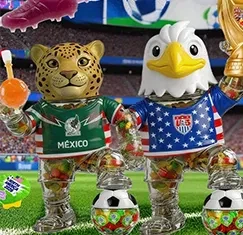
Impulse buys happen in under 3 seconds, so your candy must stand out without screaming. Focus on three shelf-ready traits: color contrast, size consistency, and strategic placement. World Cup themes thrive on bold colors-think vibrant reds and golds against neutral store backgrounds-but avoid clashing with team logos (e.g., don't put Brazil-yellow next to yellow shelves). MiniCrush uses matte-finish bags that catch light differently than glossy competitors, making their gummies pop near registers. Also, standardize pack sizes; a uniform 50g pouch fits seamlessly into existing checkout displays without staff reshuffling. Test this by visiting stores: if the candy sticks out like a sore thumb (in a good way), it's working. Crucially, avoid "theme overload." One clear World Cup element-like a subtle trophy icon-beats crowded designs with 10 player faces. Shoppers connect faster with simplicity, leading to 15% higher grab rates in trials.
Reorder Stability: Build Partnerships That Last Beyond the Final Whistle
World Cup hype fades, but smart buyers use it to lock in reliable suppliers for future events. Prioritize vendors with proven export capacity and R&D agility. For example, MiniCrush has shipped to 50+ countries for 15+ years, so they handle sudden demand spikes without delays. Ask: "Can you adapt packaging for next year's tournament in 60 days?" Suppliers with in-house design teams (like MiniCrush's patent-holding crew) tweak products fast-say, swapping "2026" for "2030" without new tooling costs. Also, verify production safety records; facilities with ISO22000 and Disney audits rarely face recalls that disrupt reorders. Don't chase the cheapest bid-chase consistency. A stable supplier means you'll never scramble for inventory when fan fever hits again. This turns one-time World Cup sales into a recurring revenue stream, with less stock risk year over year.
Assortment Strategy: Mix Core and Limited Editions
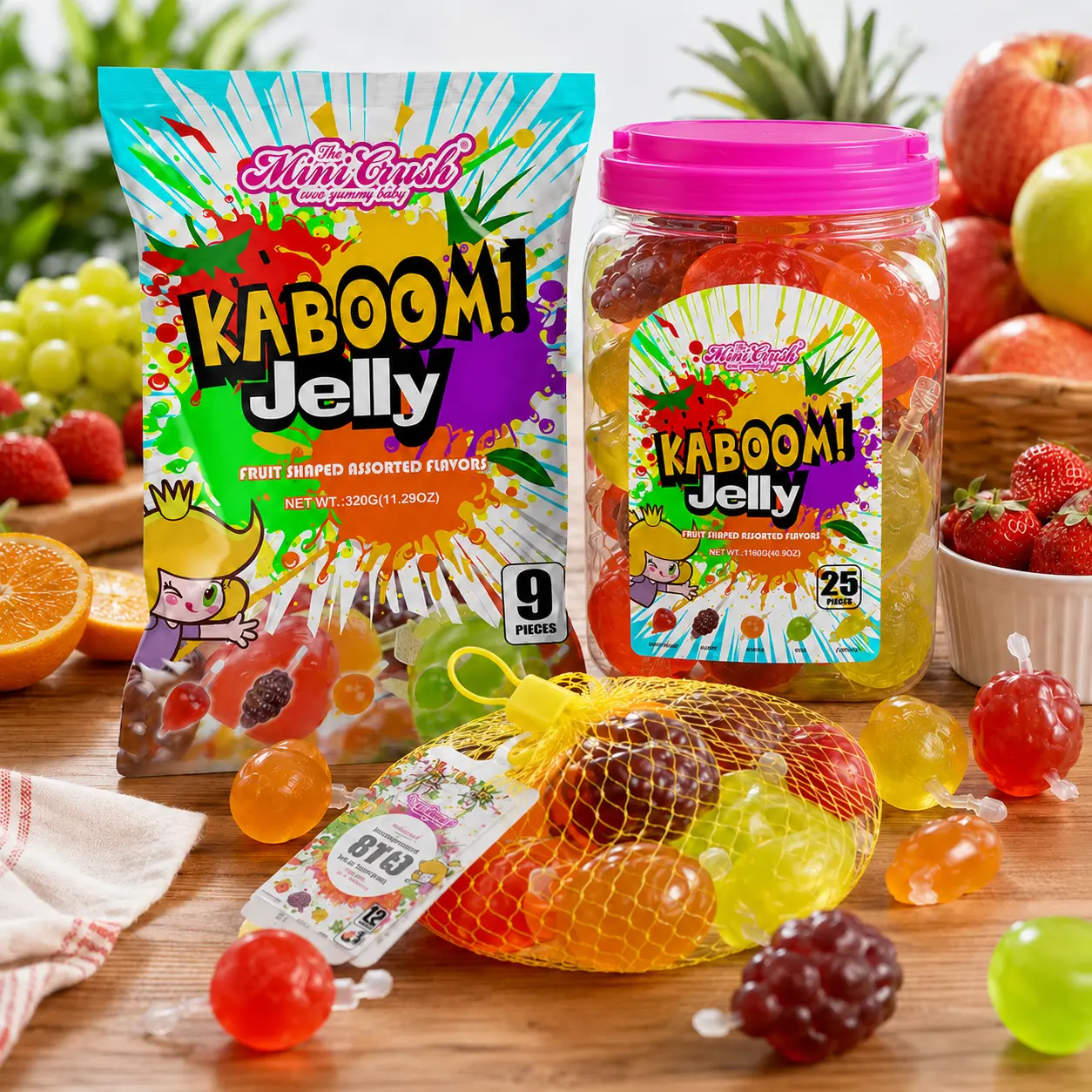
Your candy lineup needs balance: evergreen items for steady sales plus limited editions for buzz. For World Cup, pair a permanent "fan favorite" gummy (e.g., fruit punch) with a time-bound "Champion's Edition" (like mint-chocolate). MiniCrush does this well-their core jelly range stays year-round, while World Cup packs rotate out post-tournament. This strategy prevents dead stock; you can discount limited SKUs after the event without hurting brand value. As a buyer, cap limited editions at 20% of your order. Too many exclusives? You'll drown in unsold novelty items. Too few? You miss the hype-driven spike. Also, group products by purchase occasion: single-serve for impulse, family packs for planned buys. This clarity helps staff recommend items faster, boosting basket size without extra effort.
Buyer Checklist
Use this quick guide before placing any World Cup candy order:
☑ Certifications visible on front packaging (FDA/EFSA/BRC) within 3 seconds
☑ Max 5 SKUs: 1 core product + 1–2 limited editions + 1 dietary option (e.g., vegan)
☑ Packaging uses high-contrast colors with minimal text-no cluttered logos
☑ Supplier has 10+ years export experience and passed major retailer audits
☑ Sample pack fits standard checkout displays without resizing
☑ Clear reorder timeline for next event (e.g., "60 days for 2030 updates")
Common Mistakes
SKU Overload: Ordering 10+ flavors "to cover all bases" confuses shoppers and ties up cash in slow-movers. Stick to 3–5.
Hidden Compliance: Certifications buried on the back label-shoppers won't hunt for them mid-impulse.
Ignoring Shelf Flow: Giant novelty packs that don't fit register aisles get buried in stockrooms.
Chasing Trends Blindly: Stocking player-specific candy without checking local team popularity (e.g., ordering Argentina packs for a German market).
No Exit Plan: Loading up on unlimited-edition items with no strategy to clear post-tournament inventory.
Conclusion
World Cup candy shouldn't be a one-off gamble-it's a chance to build repeat business through smart procurement. Products with clean compliance, focused SKUs, and shelf-ready designs turn fleeting fan passion into habitual buys. When buyers prioritize simplicity over spectacle, they create a cycle where shoppers grab the same trusted bag year after year, long after the trophies are polished. That's how you score long-term growth, not just a tournament spike.